Category: Statistics

What to Do If the Regression Coefficient Is Negative?
Linear regression is one of the most commonly used statistical analysis techniques to understand the impact of independent variables on a dependent variable. In regression analysis, the estimated coefficients indicate the extent to which each independent variable affects the dependent variable.

Why Should Data Transformation Be Done Only Once?
Data transformation is an essential step in inferential statistical analysis. It can be a solution to ensure that research data meets certain required statistical model assumptions, such as normality, linearity, and homoscedasticity.
Data Transformation to Address Non-Normally Distributed Data
The assumption that data must be normally distributed is often a prerequisite for using certain inferential statistical tests. However, sometimes the test results do not meet expectations, indicating that the data is not normally distributed.
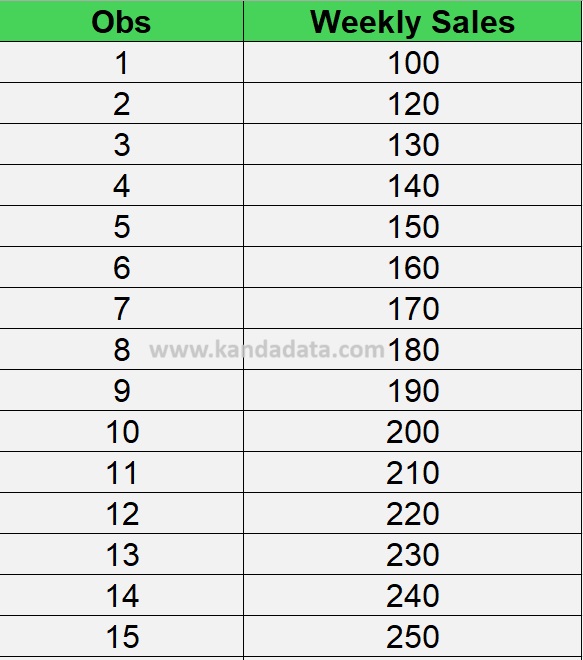
Handling Non-Normally Distributed Data by Removing Outliers
The topic I’m writing about today is prompted by questions on how to handle data that is not normally distributed. We know that in quantitative analysis, several statistical tests require that the data be normally distributed. This is an interesting topic that we will delve deeper into in this article.

The Differences Between Nominal Data Scale and Ordinal Data Scale in Research Variable Measurement
In statistical analysis, data measurement scales are divided into four main categories namely nominal scale, ordinal scale, interval scale, and ratio scale. A proper understanding of the differences among these scales is crucial for determining the appropriate data analysis method.

Dummy Variables in Multiple Linear Regression Analysis with the OLS Method
Multiple linear regression analysis is a well-known technique frequently used by researchers to analyze the influence of independent variables on dependent variables. The ordinary least squares (OLS) method is one of the most commonly used methods in this analysis.
Descriptive Statistical Analysis Using Excel | Easy and Accurate
Descriptive statistical analysis is one of the important methods in analyzing data to obtain useful information for researchers. With Excel, you can easily describe and interpret data to gain a better understanding of patterns and trends in the analyzed data.
Understanding the Essence of the Difference Between Descriptive Statistics and Inferential Statistics in Research
In conducting research, understanding the basic theory of statistics becomes crucial for researchers. Why is this so important? Because to extract accurate conclusions from research data, careful analysis using statistical tools is needed.